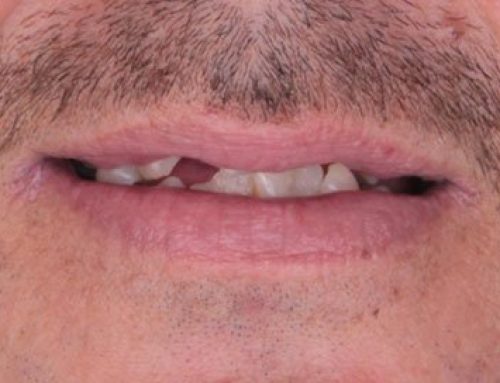
A Complete Guide to Restoring Your Smile
Losing a tooth impacts far more than just the aesthetics of your smile. It alters your ability to chew comfortably, shifts your speech patterns, and can set off a destructive chain reaction across your entire jawbone structure.
Whether you are missing a single tooth or an entire arch, modern restorative dentistry offers incredibly advanced, predictable, and biocompatible solutions. Below is a detailed breakdown of the best dental options for missing teeth, tailored specifically to where those gaps are located in your mouth.
 What Are the General Options for Missing Teeth?
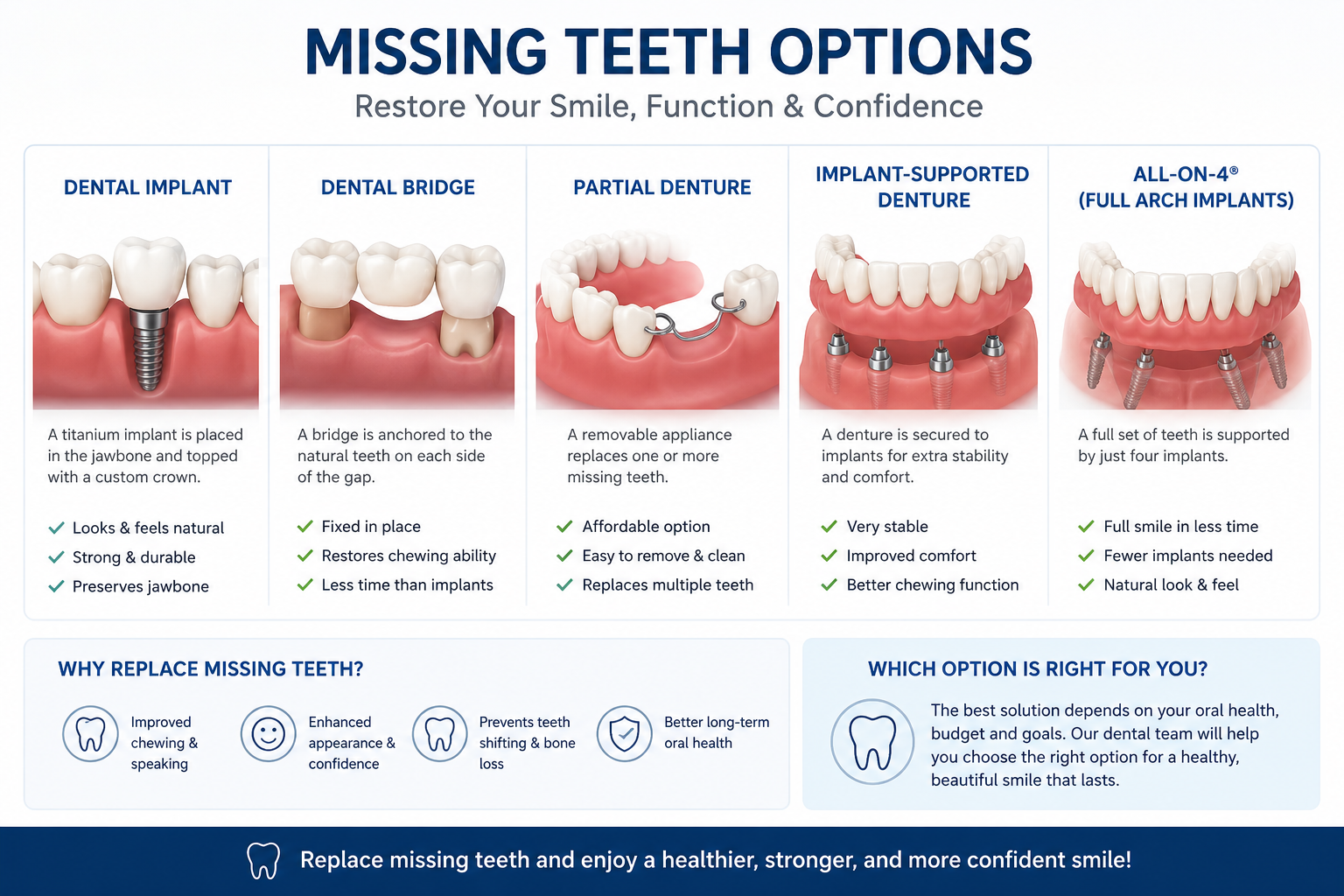
When looking at tooth replacement options as a whole, treatments generally fall into three clinical categories. Each path balances initial upfront cost, structural longevity, and how it impacts your surrounding natural teeth.
- Dental Implants: A dental implant is the only option that replaces the entire tooth structure from root to crown. A biocompatible titanium post (or ceramic zirconium post) is surgically placed into your jawbone. Over 3 to 6 months, it permanently fuses with the bone (osseointegration), acting as a natural root to support a high-end Zirconia or Emax porcelain crown.
- Fixed Dental Bridges: A dental bridge is a non-removable appliance used to bridge a gap left by one or more missing teeth. It relies on the healthy adjacent teeth (called abutments) on either side of the gap to act as structural anchors for the replacement tooth (called a pontic).
- Removable Partial or Complete Dentures: Dentures are tissue-borne, removable prosthetic appliances designed to replace multiple missing teeth (partials) or an entire upper or lower arch (complete dentures).
Missing Tooth on the Side Options (The Aesthetic Zone)
According to the National Library of Medicine, in dentistry, the aesthetic zone (or “smile zone”) refers to the upper and lower front teeth visible when a person smiles naturally.
Missing a tooth on the side of your mouth, such as a canine or premolar, creates an immediate cosmetic and functional challenge. Because these teeth are highly visible when you laugh or smile, your restoration must be flawlessly natural-looking while maintaining bite force.
- Single Dental Implant with an Emax Crown: For a highly visible side tooth, an implant combined with an Emax (lithium disilicate) ceramic crown is the premium choice. Emax perfectly mimics the light-reflecting properties of your natural tooth enamel while preserving the adjacent teeth from being ground down.
- Conventional 3-Unit Bridge: If you want a faster, non-surgical alternative, a 3-unit bridge can replace a side tooth in just two visits. However, this requires permanently reshaping the healthy teeth next to the gap to support the bridge.
- Flipper Tooth (Temporary Partial Denture): If you are waiting for a dental implant to heal or saving up for a permanent restoration, a flipper tooth is a budget-friendly, immediate cosmetic fix to keep your smile intact and prevent side teeth from tipping out of alignment.
Missing Bottom Teeth Options (The Instability Zone)
Missing bottom teeth can affect much more than just your smile. The lower teeth are located along the bottom jaw (also called the mandibular arch) and play an important role in everyday functions like biting, tearing, chewing, and holding food before swallowing.
Unlike the upper jaw, the lower jaw is constantly moving during talking, eating, and swallowing. The tongue, lips, and cheek muscles all place pressure on the lower teeth and any dental restoration attached to them. Because of this, replacing missing bottom teeth can sometimes be more challenging than replacing upper teeth.
Best Options for Replacing Missing Bottom Teeth
- Mandibular Implant Overdentures (Snap-On Dentures): If you are missing all or most of your bottom teeth, traditional lower dentures are highly prone to embarrassing slippage. Placing just 2 to 4 titanium dental implants in the lower jaw allows a custom denture to securely snap into place, restoring over 70% of your natural chewing power.
- All-on-4® New Teeth: For a completely permanent, non-removable upgrade, the All-on-4 system uses four strategically angled implants to anchor an entire fixed arch of lower teeth. This eliminates the bulkiness of a denture completely.
- Mandibular Partial Denture with Precision Clasps: If you still have several healthy natural bottom teeth, a partial denture can be puzzle-pieced into the gaps, using discreet metal or tissue-colored clasps to anchor onto your remaining teeth for stability.
Missing Back Teeth Options (The Chewing Zone)
Back teeth, also called molars and premolars, are located in the far back of the mouth behind the canine teeth. These teeth play a major role in grinding and crushing food into smaller pieces, making it easier to chew and digest properly.
When back teeth are missing, patients often experience difficulty chewing, uneven bite pressure, jaw discomfort, and extra stress on the remaining teeth. Over time, nearby teeth may also begin shifting into the empty space.
Best Options for Replacing Missing Back Teeth
Implant-Supported Dental Bridge: If you are missing two or three back teeth in a row, you do not need an individual implant for every single gap. An implant-supported bridge uses just two titanium implants on either end to support multiple custom crowns, completely restoring your chewing zone.
Single Molar Implants (Zirconia): Because back molars endure immense biting pressure, replacing a single back tooth requires the sheer strength of a monolithic Zirconia implant crown.
Cast-Metal Partial Denture: A budget-friendly way to replace multiple missing back molars. It utilizes a highly rigid, thin metal framework that rests securely on the remaining front teeth to prevent the appliance from sinking into the gums while chewing.
What Happens If You Don’t Replace Missing Teeth?
Choosing to leave a gap in your smile, especially a hidden back tooth, sets off a cascade of progressive, permanent, and costly oral health complications:
Accelerated Bone Resorption (Bone Loss): Your jawbone requires the continuous mechanical stimulation of chewing to maintain its density. The moment a tooth root is lost, the surrounding bone begins to atrophy. Over time, this leads to facial collapse, giving the face a prematurely aged, sunken appearance.
Tooth Shifting: Teeth rely on their neighbors to stay straight. When a gap is left open, the opposing tooth will begin to drift out of its socket (supra-eruption), and the adjacent teeth will tilt into the empty space. This ruins your bite alignment and creates hidden “plaque traps” that cause severe decay.
Periodontal (Gum) Disease: Shifting teeth are incredibly difficult to clean. This accelerates the accumulation of hardened tartar and plaque, leading directly to advanced gum disease, localized infections, and further tooth loss.
US vs. Tijuana Cost-Savings Hub
For many patients, the high cost of restorative care in the United States causes them to delay treatment. Located just minutes across the U.S. border from San Diego, California, BioDental Care in Tijuana provides world-class, state-of-the-art restorative care at a fraction of the cost. To help you evaluate the best value for your smile, here is a transparent cost comparison highlighting the direct financial advantages available at premium international clinics like BioDental Care in Tijuana, Mexico:
| Missing Tooth Procedure | Average United States Cost | BioDental Care (Tijuana) Cost | Total Patient Savings |
| Complete Single Dental Implant (Includes Surgical Root, Abutment & Zirconia Crown) | $3,000 – $5,000 | $1,650 (All-In Package) | Save 65% |
| Premium Custom Implant Crown (Standalone Zirconia or Emax Ceramic Unit) | $1,500 | $500 | Save 67% |
| Standard 3-Unit Dental Bridge (Replaces One Missing Tooth) | $3,600 ($1,200/unit) | $500/tooth | Save $2,100 per Bridge |
| All-on-4® Hybrid Restoration (Per Arch – Fixed Permanent New Teeth) | $25,000 – $30,000 | $8,500 (All-In Package) | Save up to 75% |