Not too long ago, extraction or aggressive tooth shaving were often the only ways to handle significant tooth damage or decay. Fortunately, modern restorative dentistry has evolved. Today, conservative approaches allow dentists to preserve as much natural tooth structure as possible.
While dental crowns (often called dental caps) are popular, they require permanent, 360-degree filing of your natural enamel. If you want a less invasive or more cost-effective solution, several high-quality alternatives can restore your smile. Here is everything you need to know about dental crowns and the best alternatives available.
What is a Dental Crown (and Why Look for Alternatives?)
A dental crown is a custom-fabricated cap, typically made of porcelain, ceramic, or zirconia, that covers a compromised tooth down to the gumline.
While crowns are durable and long-lasting (typically requiring replacement every 10 to 15 years), the procedure is irreversible. Up to 60% or more of your natural enamel must be shaved away so the crown can fit securely over the remaining core.
Common Reasons Patients Seek Alternatives:
Preserving Enamel: Wanting a conservative treatment that keeps the natural tooth intact.
Cost: High out-of-pocket prices for U.S. dental crowns ($1,200–$2,000+ per tooth).
Minimally Invasive Care: Avoiding aggressive filing when the damage doesn’t warrant a full cap.
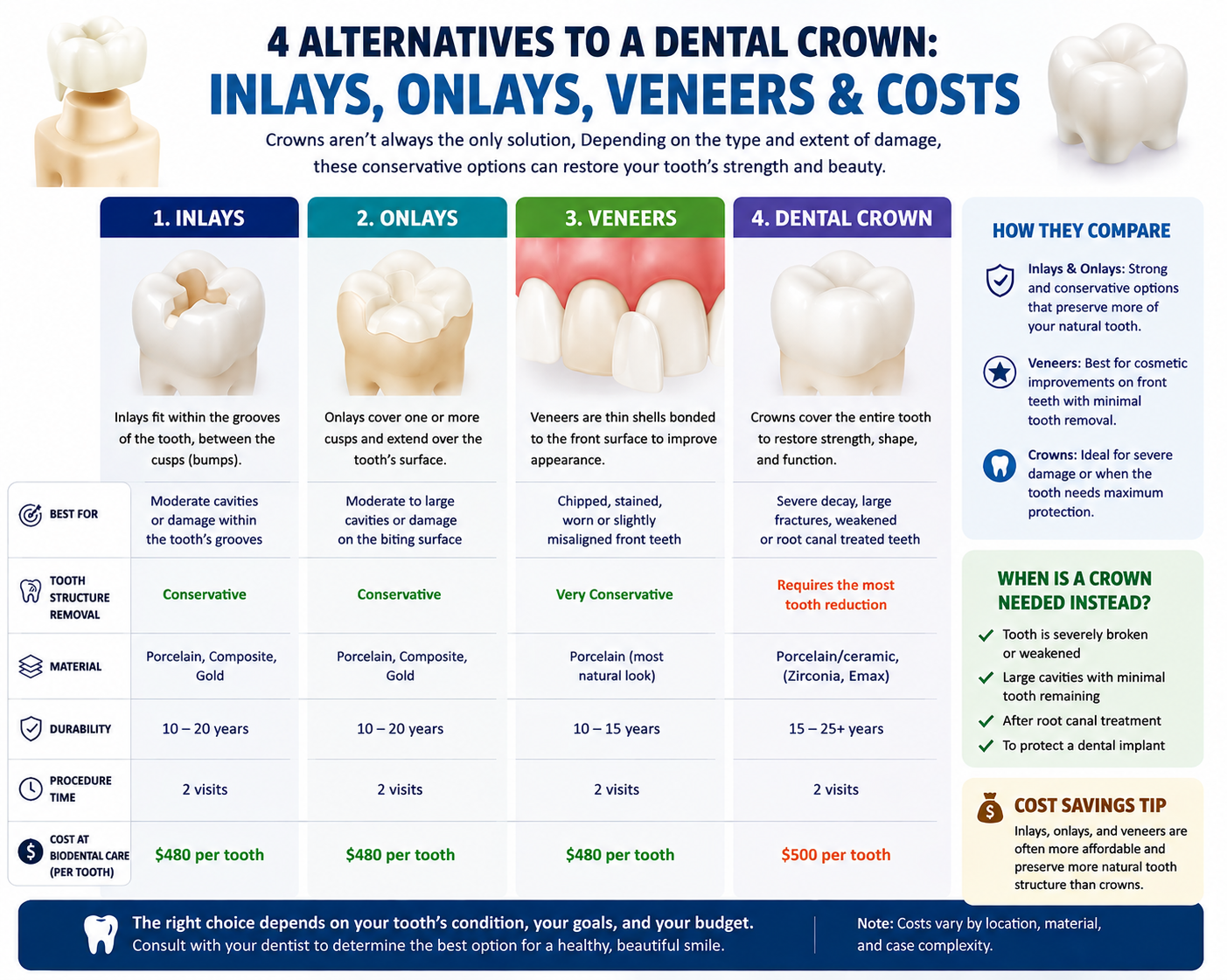
Alternatives to a Dental Crown: Inlays, Onlays, Veneers & Costs
4 Conservative Alternatives to a Dental Crown
1. Dental Onlays (“Partial Crowns”)
When tooth damage or decay extends beyond the chewing surface (cusp) but isn’t severe enough to require a full crown, a dental onlay is often the ideal middle ground.
How It Works: Custom-made in a lab from porcelain or composite, an onlay covers only the damaged cusps while preserving all healthy natural enamel.
Best For: Teeth with moderate damage or structural weakness where full coverage isn’t strictly necessary.
2. Dental Inlays
If decay is concentrated within the deep grooves of your tooth rather than the outer points, a dental inlay provides a far superior fix compared to a traditional large filling.
How It Works: Unlike standard direct fillings, inlays are pre-molded porcelain or composite pieces bonded directly inside the tooth’s surface. They resist fracturing under heavy chewing pressure.
Best For: Replacing large, failing amalgam fillings or treating deep internal decay.
3. Porcelain Veneers
If your primary concern is the appearance of a front tooth, such as discoloration, minor fractures, or gaps, a porcelain veneer offers a aesthetic alternative to a crown.
How It Works: Veneers are thin, durable ceramic shells bonded directly to the front surface of the tooth. Unlike crowns, which require total tooth reduction, veneers require only a micro-thin layer of enamel removal.
Best For: Cosmetic repairs on front teeth where structural integrity remains strong.
4. Composite Dental Bonding
For minor surface defects, composite resin bonding is the quickest and least invasive alternative.
How It Works: A tooth-colored resin is applied directly to the affected area, shaped by hand, and hardened with a specialized curing light. No tooth structure needs to be removed.
Best For: Small chips, minor fractures, and surface cosmetic touch-ups.
Dental Crown Alternatives at a Glance
| Restoration Type | Tooth Removal Required | Primary Benefit | Average Lifespan | Cost (US vs. Tijuana) |
| Composite Bonding | None to Minimal | Quickest & lowest cost | 5–7 years | $100 – $300 |
| Inlay | Minimal (Decay only) | Fits precisely inside grooves | 10–15+ years | Save up to 70% in TJ |
| Onlay (“Partial Crown”) | Moderate (Preserves healthy cusps) | Conservative alternative to a cap | 10–15+ years | Save up to 70% in TJ |
| Porcelain Veneer | Very Light (Front enamel only) | High aesthetics for front teeth | 10–15 years | Save up to 70% in TJ |
| Full Dental Crown | High (360° tooth reduction) | Complete coverage & support | 10–15+ years | $1,200+ (US) vs $300 (TJ) |
When Can You Not Use a Crown Alternative?
While conservative dentistry is always preferred, a full dental crown remains necessary in certain clinical situations:
Post-Root Canal Treatment: Teeth treated with a root canal become brittle over time and require a full crown to prevent cracking.
Severe Tooth Fractures: If more than 50% of the tooth structure is missing or damaged, an inlay or onlay will not provide sufficient strength.
Advanced Tooth Wear: Severe bruxism (teeth grinding) may require full coverage to restore bite height and alignment.
Save 50%–70% on Restorative Dental Care in Tijuana
If you need high-quality restorative treatment but find U.S. prices prohibitive, BioDental Care in Tijuana offers world-class solutions just minutes from the San Diego border.
From conservative porcelain inlays and onlays to metal-free biocompatible crowns and veneers, our experienced dental team utilizes state-of-the-art diagnostic technology to deliver long-lasting, healthy smiles at a fraction of U.S. costs. For more information about dental crown alternatives or to schedule a consultation, call us at (619) 754-8508.